
Before I could put a single stitch into cloth, I had to answer a deceptively simple question: what exactly am I going to embroider? The Arts & Crafts Movement left behind a vast archive of patterns, and motifs, but the practical reality of recreating a piece from the early twentieth century begins with something far more mundane: finding a pattern that I can actually transfer onto fabric.
By the late 1800s, pre‑stamped fabrics and iron‑on transfers were widely available. In theory, I could have hunted down an original pre‑printed square of linen or cotton from the period. In practice, the chances of finding a 100‑plus‑year‑old transfer in good condition tucked behind a stack of Depression glass in my local antique shops are…slim to say the least. So I turned to a method with a much longer history: pouncing.
“Prick and pounce” is a transfer technique that predates the Arts & Crafts Movement by centuries. First you draw up your pattern, prick tiny holes along the lines of a paper pattern, lay it on your fabric, and dust it with chalk or pouncing powder. The pigment falls through the holes, leaving a connect-the-dots outline of the design. It’s painfully slow but dependable for good results.
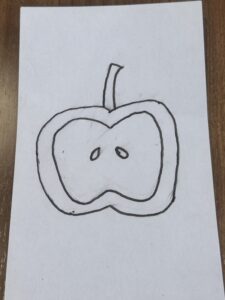
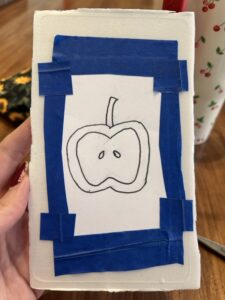
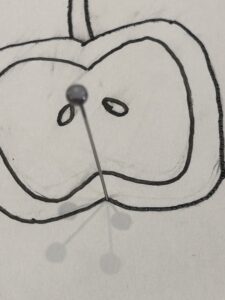
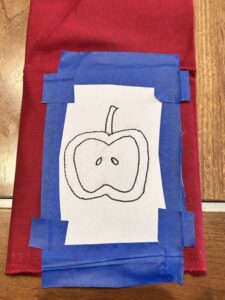
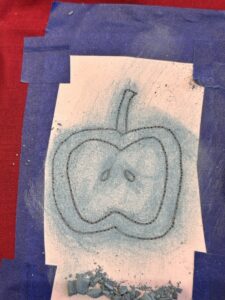
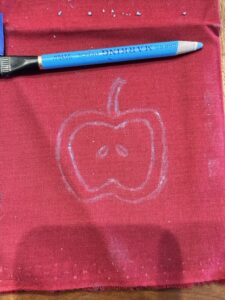
But before I could pounce anything, I had to decide what I was embroidering on. The movement embraced everything from book covers to table linens, but for the sake of time, materials, and my own sanity, I settled on a decorative handkerchief. It’s small enough to complete in ten weeks, historically appropriate, and has a long history as fashion accessories. While the handkerchief I found in an antique shop isn’t from 1900, its lightweight cotton construction is similar to period examples and frankly, even if I had found a blank square from the era, there’s no guarantee it would still be strong enough to stitch into. With that I can move forward to the next step